 |
Updated Daily (or whenever I feel like it...) Bookmark so you don't miss a thing! |
|
History of Jupiter-Tequesta WHERE THE WATERS of the Loxahatchee River, translated from the Seminole Indian words Lowchow (turtle) hatchee (river) to Lochahatchee, met the Indian and Jupiter Rivers, great shell middens attest to the annual encampment and feasting of several thousand indians for many years in succession. One mound was 600 feet long and more than 20 feet high. AS LAYERS OF SHELL are removed to reveal campfires, stone implements, arrowheads, pipes and an abundance of fish and game bones, these remnants of prehistory offer a fascinating glimpse of life among the very earliest of settlers.
THE NAME TEQUESTA came from an Indian tribe, pre-dating 1775, that inhabited much of the lower portion of Florida's east coast, but not the area that bears their name. A FIRST HAND ACCOUNT of life among the hostile Jobes Indians comes from "Jonathan Dickinson's Journal". The story details the 1696 shipwreck of 25 passengers and crew of the barkentine 'Reformation' on Jupiter Island during an August hurricane and their subsequent capture by the Indians. The party was stripped of all clothing and herded down to the inlet where they were ferried across to the rude village on the shell mound. Later, they were allowed to make their way up the beach, naked and starving, to reach St. Augustine after months of incredible hardship. TODAY, THE AREA'S 11,000 acre state park that was once known as Camp Murphy, a World War II training school, carries the name Jonathan Dickinson State Park. NUMEROUS SETTLERS in northern FLorida and many broken treaties brought the Second Seminole War (1835-1842) to Jupiter in September of 1837 when a small naval expedition and military force were overpowered and forced to retreat by the indians. Later, General T.S. Jessup brought about 1,500 men back to the area where they engaged about 300 warriors in battle. Within a week the remaining soldiers had constructed a stockade on Bemis Point, now known as Pennock Point. In later action the general ordered a mass capture of Seminoles and more than 500 were sent to reservations in the West, many of whom died en route. IT IS INTERESTING TO NOTE that during this period Sam Colt, of repeating rifle fame, visited Fort Jupiter to demonstrate his latest rifle. FIfty were ordered to equip dragoons for further Everglades skirmishes. WHEN THE INLET CLOSED in 1844, the area was considered unhealthy and the troops were moved to other posts. The area then reverted to the few remaining Seminole Indians until about 1855 when a further hunt for indians brought about the establishment of another stockade post manned with 85 officers and troops. It was May of that year that the federal government established the Jupiter Military Reservation, a tract of some 9,088 acres which included a large part of the Loxahatchee River. Already included in the reservation was a portion designated for a lighthouse. CONGRESS APPROPRIATED $35,000 and it was during 1855 that construction of the lighthouse began. Plans called for a First Order light, visible 18-27 miles, to mark the reef off Jupiter Inlet and serve as a guide. The original height of 90 feet was changed to 105' and the site selected was atop an Indian mound where the Indian and Loxahatchee River met. Labor, indian problems, and material shipments delayed the structure's completion until 1859 (with an added cost overrun of $25,000). Materials had to be shipped to an inlet 35 miles north of Jupiter, then transferred to scows with a 20 inch draft for maneuvering down the Indian River through 10 miles of extremely shallow water. (The Indian River has since been dredged and is now part of the Intracoastal Waterway system).
IT WAS DURING THE 1928 HURRICANE, when wind gusts were estimated at 200 mph, that Captain Charles Seabrook, then keeper, could not allow the light to remain dark. Though ill, Seabrook found and reinstalled the old oil mineral lamps and his sixteen year-old son Franklin climbed the spiral stairs inside the tower, that was later estimated to have been swaying 17 inches, to hand turn the mantle throughout the duration of one of the worst storms in Florida's recorded history. The boy later received a Congressional commendation. FOLLOWING THE SEMINOLE CONFLICTS and the removal of the military, settlers requested the opening of the Jupiter Reservation to homesteading. WHEN THE PIONEERS began to push further south in the latter 1800's, most of the travel was done by water transportation and Jupiter became a major transportation center. Steamers, sailboats and scows, all carrying goods and passengers for South Florida pulled up to docks across from the lighthouse. Floating hotels and boarding houses sprang up as adventurous hunters, fisherman and settlers came. Guests at the steamer hotel included President and Mrs. Grover Cleveland. BOATS WERE SUCH AN INTEGRAL PART of everyday life, even the children went to school aboard a school boat - it was a double ended lifeboat from the U.S. battleship "Maine". A SEVEN AND A HALF MILE narrow gauge railroad became the link between Jupiter and southern Florida from 1888 to 1896. Nicknamed the Celestial Railroad, it ran from Jupiter to Juno steamboat docks with fictitious stations at Venus and Mars. The little railroad provided a vital transportation link for early development of South Florida. The fare was 10 cents a mile and the engineer was always willing to stop along the way to allow passengers to hunt for the plentiful game seen by the tracks. BY 1894 HENRY MORRISON FLAGLER was developing his Florida East Coast Railroad and Palm Beach. His railroad which pushed on to Miami and later to Key West signaled the demise of the Celestial line. EARLY ECONOMIC GROWTH of the Jupiter-Tequesta community depended on the logging of pines and cypress, fishing and the cultivation of pineapples, citrus, truck farms, dairy herds and flowers. IN 1890 Dade, Broward, and Palm Beach County were one, with the county seat in Juno. The census of that year gave the population as 861. By 1910, the same seat had 17,510 people. AS MORE PEOPLE came to the area, crude shell roads were built and boats were phased out as cars became more convenient. DURING WORLD WAR II black-outs were common for the area as numerous German submarine sightings were confirmed and allied ships were torpedoed within sight of the lighthouse. Coast Guard horse patrols kept constant watch for landings. DEVELOPMENT CONTINUED and in 1957 Tequesta became the sister city of Jupiter. Their growth and development have been interrelated since. TODAY, the area offers a variety of business and industries such as Pratt & Whitney Government Products Division of United Technologies, RCA Corporation, commercial fishing, and truck farms for winter vegetables. EDUCATION comes from the public and private school and meets the needs of students from pre-school through college and university programs.
AS OF 1983 the Jupiter-Tequesta area of Palm Beach Country is considered one of the fastest growing areas in Florida and residents are concerned with the rapid unprecedented growth. They are acting to preserve the endangered species that call the remaining waters, wetlands and wilderness home, such as the manatee, loggerhead turtle, least tern and bald eagle. Preserved and sanctuaries have been set up to protect the remaining species and the Loxahatchee River as a way of making sure its primitive and natural beauty always make it the 'river of turtles'.  |
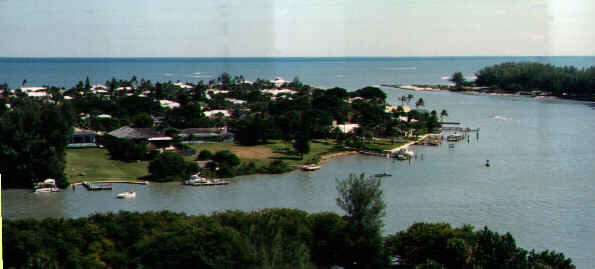 THE NAME JUPITER INLET has appeared on early maps of Florida since at least 1770 and is
thought to have come from early Spanish explorers. An account of Ponce de Leon's first
voyage in 1593 indicates he probably came to Jupiter Inlet for wood and water. Menendez
visited the inlet in December and January of 1555 - 1556 and found a tribe of Jaega Indians
who called themselves Jobes (pronounced 'Hoe-bay' by the Spaniards). In 1763 when
the English arrived, their translation of Jobes to Jove somehow resulted in Jupiter and has
never been changed.
THE NAME JUPITER INLET has appeared on early maps of Florida since at least 1770 and is
thought to have come from early Spanish explorers. An account of Ponce de Leon's first
voyage in 1593 indicates he probably came to Jupiter Inlet for wood and water. Menendez
visited the inlet in December and January of 1555 - 1556 and found a tribe of Jaega Indians
who called themselves Jobes (pronounced 'Hoe-bay' by the Spaniards). In 1763 when
the English arrived, their translation of Jobes to Jove somehow resulted in Jupiter and has
never been changed.
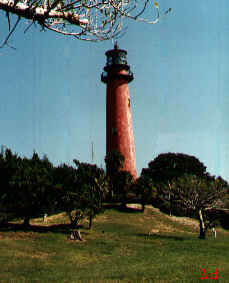 FIRST LIGHTED JULY 10, 1860, the light was darkened in 1861 by a band of Confederate sympathizers
who dismantled and hid the light to dissuade blockade runners. Following the Civil War the
light apparatus was found by Captain James A. Armour, who later served 40 years as head
keeper, and in 1866 once again guided ships on the Atlantic. Since that day, the Jupiter
Lighthouse has only had two brief periods of darkness. One two hour period occurred when an
intoxicated assistant keeper forgot to turn the oil on. Later, after the old oil lamps and weight
turning device were replaced with electric equipment, the light was extinguished during the
devastating 1928 hurricane when the electricity went off and the auxiliary diesel wouldn't start.
FIRST LIGHTED JULY 10, 1860, the light was darkened in 1861 by a band of Confederate sympathizers
who dismantled and hid the light to dissuade blockade runners. Following the Civil War the
light apparatus was found by Captain James A. Armour, who later served 40 years as head
keeper, and in 1866 once again guided ships on the Atlantic. Since that day, the Jupiter
Lighthouse has only had two brief periods of darkness. One two hour period occurred when an
intoxicated assistant keeper forgot to turn the oil on. Later, after the old oil lamps and weight
turning device were replaced with electric equipment, the light was extinguished during the
devastating 1928 hurricane when the electricity went off and the auxiliary diesel wouldn't start.
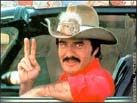 LOCATED 17 miles north of Palm Beach, Jupiter-Tequesta offers the best in outdoor activites
from salt and fresh water boating and fishing to diving, tennis, and golf. A full range of state,
county, and town park facilities and beaches attracts residents and tourists alike, while
the cultural activities include art exhibits and cultural programs at facilities like the
Lighthouse Gallery. The Burt Reynolds Dinner Theatre presents year round entertainment by
well known actors and actresses. Historical museums include the DuBois pioneer home
and the Jupiter Lighthouse Park Museum.
LOCATED 17 miles north of Palm Beach, Jupiter-Tequesta offers the best in outdoor activites
from salt and fresh water boating and fishing to diving, tennis, and golf. A full range of state,
county, and town park facilities and beaches attracts residents and tourists alike, while
the cultural activities include art exhibits and cultural programs at facilities like the
Lighthouse Gallery. The Burt Reynolds Dinner Theatre presents year round entertainment by
well known actors and actresses. Historical museums include the DuBois pioneer home
and the Jupiter Lighthouse Park Museum.